
Choosing the best time to visit Rottnest Island
The best time to visit Rottnest Island depends on whether the priority is beach time, cycling, an evening stay or a weather-dependent activity. The long-term monthly record shows warmer, drier summer months and cooler, wetter winter months. Use that pattern to choose a broad travel period, then use the forecast and operator updates to shape the actual day. Use local wind and sea forecasts when choosing a particular bay.
December to February suits a preference for warmer conditions in that record. June to August is cooler and wetter, with spring and autumn between those seasonal patterns. These differences help with clothing and the balance between outdoor stops and other plans. They do not identify a universally suitable month for every visitor, or a season in which a ferry crossing or water activity is assured.
Start with the outing that matters most. A relaxed visit to the settlement leaves a different set of choices from a day built around snorkelling or a tandem skydive. Put the ferry, activity and onward travel in the same plan, allowing room for a change. The tour overview helps separate activities that begin on the island from packages that include the sea crossing.
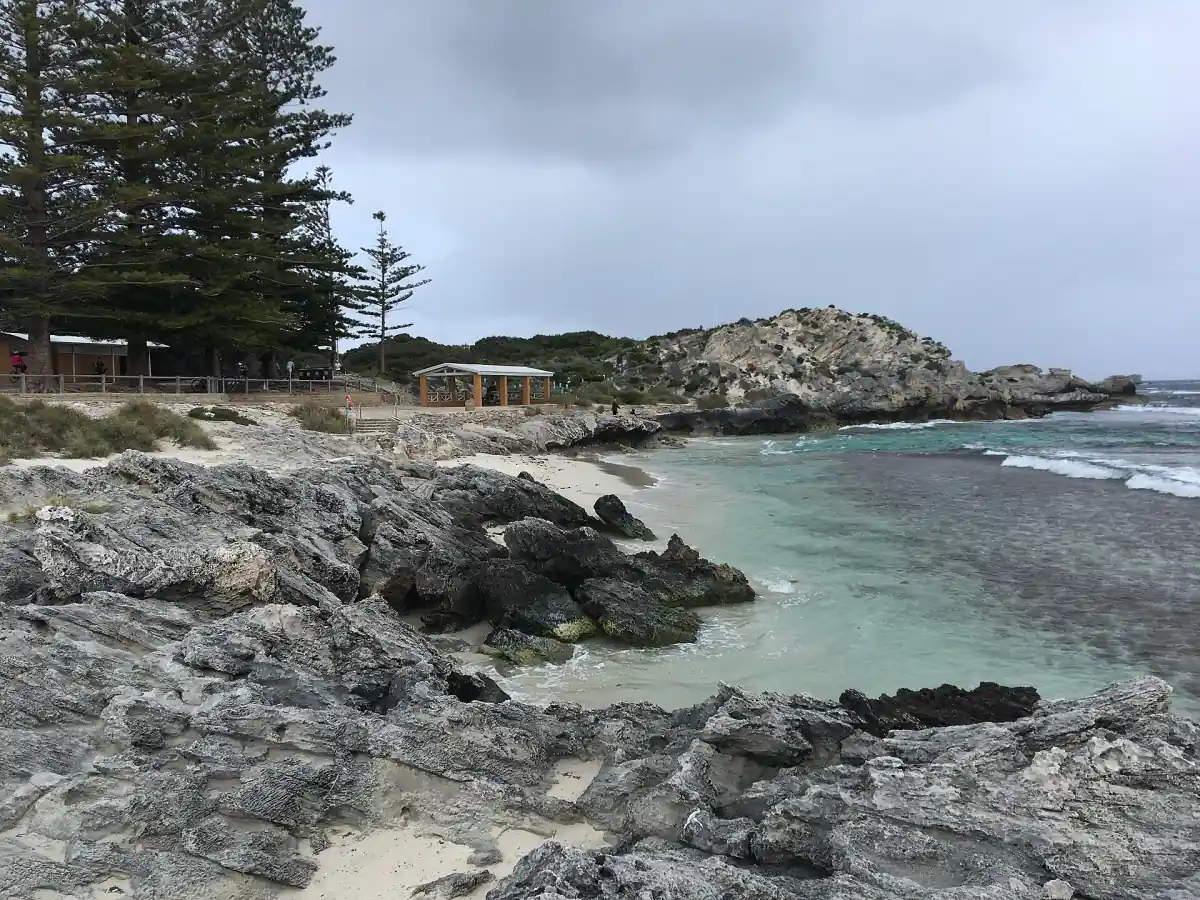
Weather averages from the Bureau of Meteorology
The table uses Bureau of Meteorology station 009193, Rottnest Island, with data available to 31 October 2026. Its basis is “All years of record”, covering the available observations, rather than a fixed climate-normal period. Maximum and minimum temperatures are long-term averages of daily values; rainfall is the average monthly rainfall total. Read the figures as seasonal context, rather than a forecast for booked dates.
For December, the published averages are a daily maximum of 25.3°C, a minimum of 17.8°C and monthly rainfall of 9.4 mm. That makes December part of the warmer, drier summer pattern in this series. Keep a particular December beach or boat outing flexible around actual conditions, just as in another month. The rainfall figure alone says little about visibility, waves or wind on the chosen day.
A weather-dependent activity
A tandem skydive offers an aerial perspective when weather permits.
Hand-picked tours, booked through GetYourGuide. Prices are indicative starting prices in Australian dollars (as of October 2026). Tap a tour for live availability and the current price in your currency.
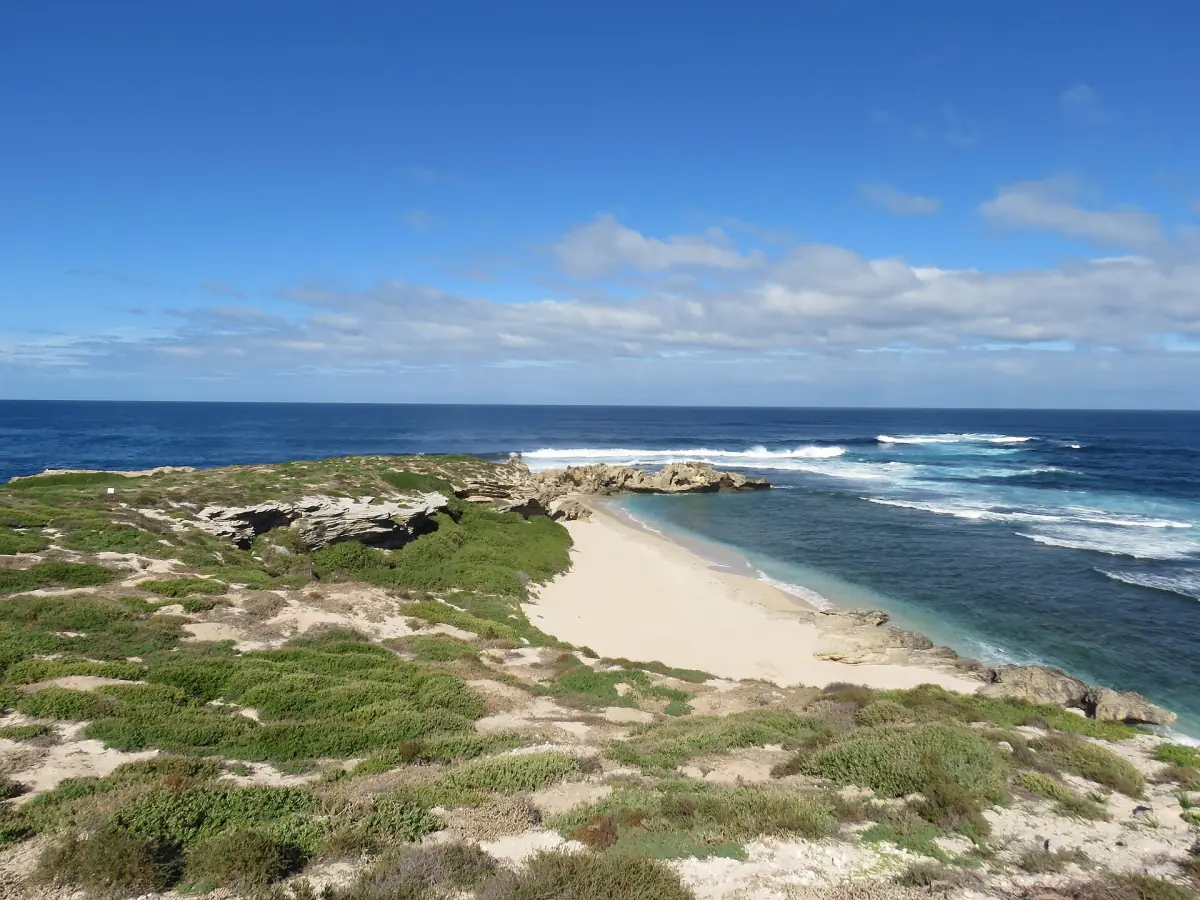
A weather-dependent tandem skydive
The island-airport activity offers a tandem skydive with a beach landing, with jump height depending on the option. Arrange travel to Rottnest separately and allow for weather changes.
Monthly temperature and rainfall
| Month | Mean maximum °C | Mean minimum °C | Rainfall mm |
|---|---|---|---|
| January | 26.7 | 19.2 | 13.3 |
| February | 27.3 | 19.5 | 10.0 |
| March | 26.2 | 18.8 | 20.0 |
| April | 23.8 | 17.3 | 32.3 |
| May | 21.2 | 15.3 | 68.0 |
| June | 18.8 | 13.5 | 101.2 |
| July | 17.9 | 12.5 | 113.5 |
| August | 18.0 | 12.4 | 86.4 |
| September | 19.0 | 13.0 | 50.6 |
| October | 20.6 | 14.1 | 27.9 |
| November | 23.1 | 15.9 | 18.2 |
| December | 25.3 | 17.8 | 9.4 |
Wind and the choice of coast
South-westerly winds are the prevailing pattern described by the island authority. Its general guidance points towards the northern coast in southerly wind and the southern coast in northerly wind. That is a starting point for choosing a bay, followed by checking conditions, signs and the water itself. A sheltered-looking location still needs an assessment before swimming.
Keep coastal plans adaptable rather than attaching a specific beach to every date. The beach guide compares The Basin, Little Salmon Bay and Parker Point, including differences in facilities. For an outing centred on the underwater trails or a guided session, read the snorkelling guide. The month alone should not decide whether entering the water is appropriate for the conditions and the swimmer.
Ferry cancellations and travel margins
Ferries are published year-round, but weather and safety can lead to changes or cancellations. The Perth river section may also be replaced by a bus. Choose the ferry connection for the actual date and return arrangement rather than copying a sailing from another season. Leave space around the crossing when an onward journey would be difficult to move.
An island overnight stay changes the daily timetable but does not remove the need to plan the return journey. Keep an alternative for a day when conditions alter the activity programme. A plan with room for a coastal walk or a settlement visit is easier to adjust than one built from consecutive, tightly connected departures. Accommodation and ferry reservations should describe the same intended return date.
Weather-dependent activities and access notices
The tandem skydive starts at Rottnest Island Airport and includes a beach landing. Travel to the island is separate. Choose it as a weather-dependent activity and leave flexibility around the booking rather than treating a particular season as a promise that the jump will proceed. The same planning principle applies to boat outings and time in the water.
Access notices are separate from climate patterns. As of 3 November 2026, Changing Places on Henderson Avenue has been closed since 20 July 2026, with reopening announced by mid-December 2026. Anyone relying on that facility should arrange an alternative through their arrival planning. See airport connections and island arrival for the access context and mainland terminal works.
Season and weather questions
Is summer the right choice for warmer weather?
The long-term series shows December to February as warmer and drier than winter. Use the current forecast for the actual visit, especially for coastal activities.
Does the rainfall table predict calm water?
Monthly rainfall is not a forecast of wind or sea conditions. Choose a bay using the day's conditions and local signs.
Can the skydive include my journey to the island?
The selected skydive starts at the island airport. Arrange the island journey separately and include travel margins in a weather-dependent day.